Cloth that Changed the World: The Art and Fashion of Indian Chintz, Sarah Fee
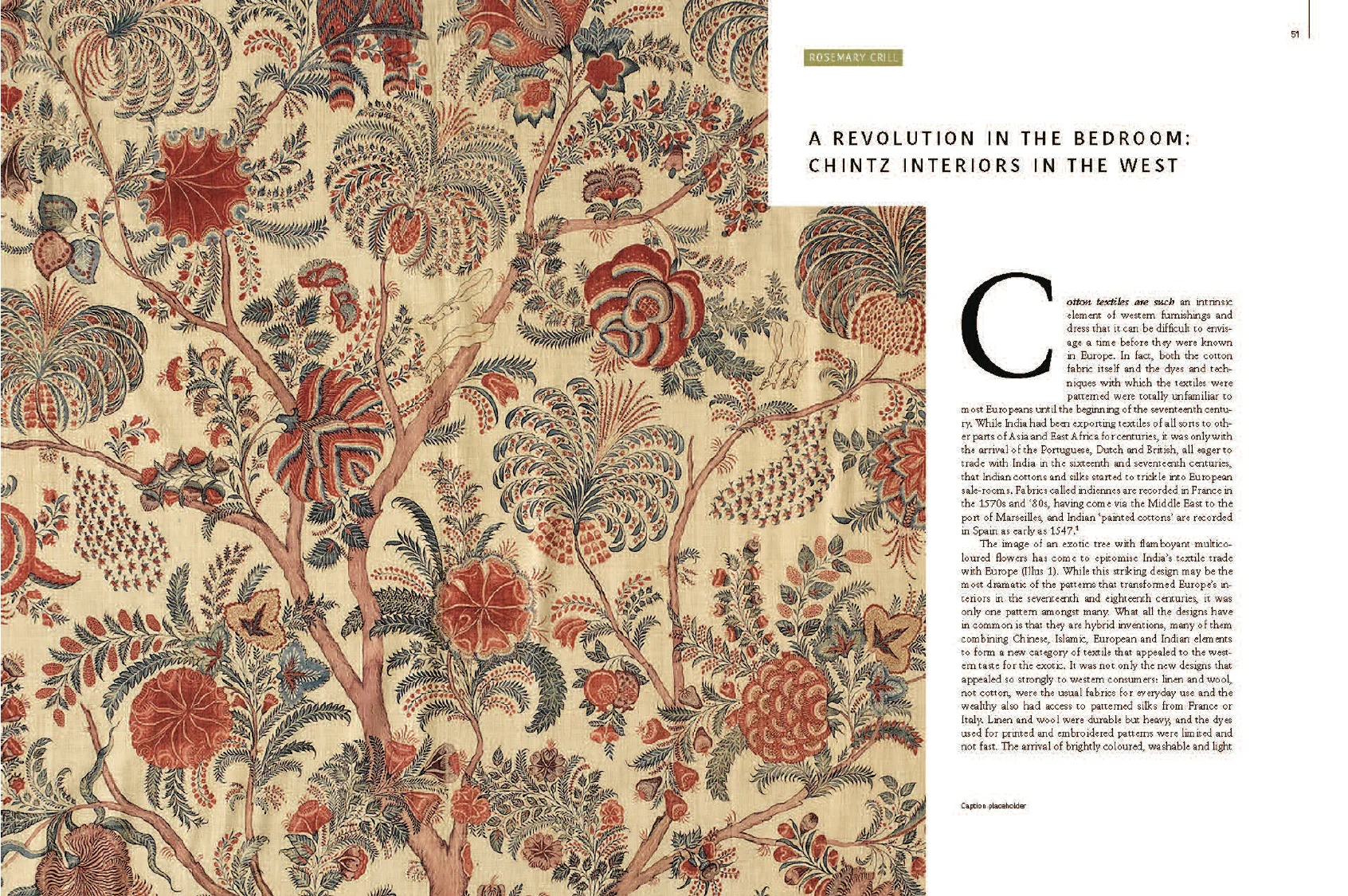
This beautifully illustrated volume—rooted in the Royal Ontario Museum’s famed collection—unravels the story of India’s lustrous chintz: a kaleidoscope of printed and painted surfaces that first sailed in the spice-driven trade of the East Indies, then captivated Europe. By the 17th and 18th centuries, these vibrant textiles had not only sparked attempts at mechanical mimicry that helped ignite the Industrial Revolution, but also birthed a global aesthetic dialogue, spreading from English court dress to sacred banners in Java, and from palatial Indian interiors to contemporary runways in Mumbai.
Presented as a tactile tapestry of essays, archival fragments, and vivid photography, the book honours both the artisan and the artifact. It showcases monumental palampores and block-printed yardage alongside intimate glimpses of rural printers at work—revealing how botanical motifs, botanical mordants, and ingenious resist techniques interlace with global commerce and colonial entanglements. At once scholarly and sensorial, it traces the lineage of today’s floral linens and printed T‑shirts back to ancient dye vats, giving shape to a richly woven narrative that spans 1,000 years and four continents.
“[A]n intriguing and fascinating narrative through centuries of trade, artistry, politics and culture drawn from the threads of this classic cloth”—Embroidery magazine
“Extraordinary colour photographs support discussion of cloth and block designs (some botanical), cotton cloth production and manufacturing, natural dyes, mordants and resists, and makers’ intent. Images of cloth (full and fragments), tools and materials, products and garments, makers and work in progress, and ceremonial textiles are joined by maps, documents, and explanations of terminology. . . . This accessible volume will be valuable for those new to the study of textiles and specialists interested in textile history.”—L. L. Kriner, Choice
“Cloth That Changed the World offers a beautiful catalogue of the Royal Ontario Museum’s exceptional collection alongside diverse, authoritative texts.”—Avalon Fotheringham, Journal of the Oriental Rug and Textile Society of Great Britain
Our thoughts on this book: read here
About the Author
Dr. Sarah Fee is the Senior Curator of Eastern Hemisphere Fashion & Textiles at the Royal Ontario Museum, where she oversees a collection of some 15,000 pieces spanning Asia, Africa, and Eastern Europe. A seasoned field researcher—trained in anthropology at Oxford and Madagascar-based weaving and dyeing traditions—she brings a richly interdisciplinary lens to textile history, with a particular passion for the global journeys of Indian chintz.
Publication date: 2020
Publisher: Yale University Press
Pages: 321
ISBN: 9780300246797
Original: $108.32
-65%$108.32
$37.91


Description
This beautifully illustrated volume—rooted in the Royal Ontario Museum’s famed collection—unravels the story of India’s lustrous chintz: a kaleidoscope of printed and painted surfaces that first sailed in the spice-driven trade of the East Indies, then captivated Europe. By the 17th and 18th centuries, these vibrant textiles had not only sparked attempts at mechanical mimicry that helped ignite the Industrial Revolution, but also birthed a global aesthetic dialogue, spreading from English court dress to sacred banners in Java, and from palatial Indian interiors to contemporary runways in Mumbai.
Presented as a tactile tapestry of essays, archival fragments, and vivid photography, the book honours both the artisan and the artifact. It showcases monumental palampores and block-printed yardage alongside intimate glimpses of rural printers at work—revealing how botanical motifs, botanical mordants, and ingenious resist techniques interlace with global commerce and colonial entanglements. At once scholarly and sensorial, it traces the lineage of today’s floral linens and printed T‑shirts back to ancient dye vats, giving shape to a richly woven narrative that spans 1,000 years and four continents.
“[A]n intriguing and fascinating narrative through centuries of trade, artistry, politics and culture drawn from the threads of this classic cloth”—Embroidery magazine
“Extraordinary colour photographs support discussion of cloth and block designs (some botanical), cotton cloth production and manufacturing, natural dyes, mordants and resists, and makers’ intent. Images of cloth (full and fragments), tools and materials, products and garments, makers and work in progress, and ceremonial textiles are joined by maps, documents, and explanations of terminology. . . . This accessible volume will be valuable for those new to the study of textiles and specialists interested in textile history.”—L. L. Kriner, Choice
“Cloth That Changed the World offers a beautiful catalogue of the Royal Ontario Museum’s exceptional collection alongside diverse, authoritative texts.”—Avalon Fotheringham, Journal of the Oriental Rug and Textile Society of Great Britain
Our thoughts on this book: read here
About the Author
Dr. Sarah Fee is the Senior Curator of Eastern Hemisphere Fashion & Textiles at the Royal Ontario Museum, where she oversees a collection of some 15,000 pieces spanning Asia, Africa, and Eastern Europe. A seasoned field researcher—trained in anthropology at Oxford and Madagascar-based weaving and dyeing traditions—she brings a richly interdisciplinary lens to textile history, with a particular passion for the global journeys of Indian chintz.
Publication date: 2020
Publisher: Yale University Press
Pages: 321
ISBN: 9780300246797