🚚 Free Worldwide Shipping on All Orders!Shop Now
Issue 23 Urban
May/June 2008


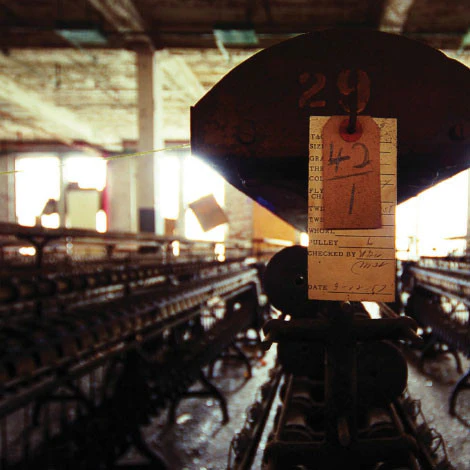
INTRODUCING READERS TO THE NEW AND INNOVATIVE is an important part of a magazine’s role. For a textile publication this isn’t difficult, after all nothing changes faster than fashion and textiles have been at the forefront of innovation since James Hargreaves invented the Spinning Jenny in 1768. The wealth generated by this and subsequent industrial innovations has shaped the developed world and beyond. Blue jeans, are one of the most potent symbols of the global nature of the textile industry. In their many guises, from work wear to designer status symbol, they demonstrate the importance of textiles in National economies and individual lives. Parallels between the working conditions endured by those employed in the Lancashire cotton mills in the 1800s and those in China’s denim factories today, show that, despite the fast pace of the fashion world, the textile industry as a whole has dragged its heels in the race to become sustainable or transparent in its production methods. The first report from the London College of Fashion’s Centre for Sustainable Fashion points out, “the trail has been blazed by the automotive and food industries with research and development”. Individual designers are doing their best to catch up, Natalie Chanin, is inspired by her local textile heritage. She lives in Florence, Alabama which was the ‘t-shirt capital of world’ in the 1980s. Production may have moved to China but Chanin reinterprets this history in her recycled garments and encourages others to do the same with her simple project ideas. Striking the right balance between commercially viable and environmentally sound is difficult. As Carin Mansfield, pg 66 will testify, to source organic cotton one has to search the globe and to have it woven to a high standard one may have to go to Japan. If your garment is then constructed
in the UK and shipped back to Japan for sale you’ve clocked up an awful lot of air miles. We are aware that there are paradoxes in ‘ethical or sustainable textile production’ that need to be ironed out and we don’t claim to be an accreditation body, but we do want to mark the achievements made by textiles companies. In this issue you will see our new ‘sustain’ news section and a stamp that will appear wherever a product uses recycled material, organic cloth or ethical production practices. We’re even going to try and earn one ourselves...
Polly Leonard, Founder
Select Type
From $11.38
Original: $32.50
-65%Issue 23 Urban—
$32.50
$11.38


Description
May/June 2008
INTRODUCING READERS TO THE NEW AND INNOVATIVE is an important part of a magazine’s role. For a textile publication this isn’t difficult, after all nothing changes faster than fashion and textiles have been at the forefront of innovation since James Hargreaves invented the Spinning Jenny in 1768. The wealth generated by this and subsequent industrial innovations has shaped the developed world and beyond. Blue jeans, are one of the most potent symbols of the global nature of the textile industry. In their many guises, from work wear to designer status symbol, they demonstrate the importance of textiles in National economies and individual lives. Parallels between the working conditions endured by those employed in the Lancashire cotton mills in the 1800s and those in China’s denim factories today, show that, despite the fast pace of the fashion world, the textile industry as a whole has dragged its heels in the race to become sustainable or transparent in its production methods. The first report from the London College of Fashion’s Centre for Sustainable Fashion points out, “the trail has been blazed by the automotive and food industries with research and development”. Individual designers are doing their best to catch up, Natalie Chanin, is inspired by her local textile heritage. She lives in Florence, Alabama which was the ‘t-shirt capital of world’ in the 1980s. Production may have moved to China but Chanin reinterprets this history in her recycled garments and encourages others to do the same with her simple project ideas. Striking the right balance between commercially viable and environmentally sound is difficult. As Carin Mansfield, pg 66 will testify, to source organic cotton one has to search the globe and to have it woven to a high standard one may have to go to Japan. If your garment is then constructed
in the UK and shipped back to Japan for sale you’ve clocked up an awful lot of air miles. We are aware that there are paradoxes in ‘ethical or sustainable textile production’ that need to be ironed out and we don’t claim to be an accreditation body, but we do want to mark the achievements made by textiles companies. In this issue you will see our new ‘sustain’ news section and a stamp that will appear wherever a product uses recycled material, organic cloth or ethical production practices. We’re even going to try and earn one ourselves...
Polly Leonard, Founder